
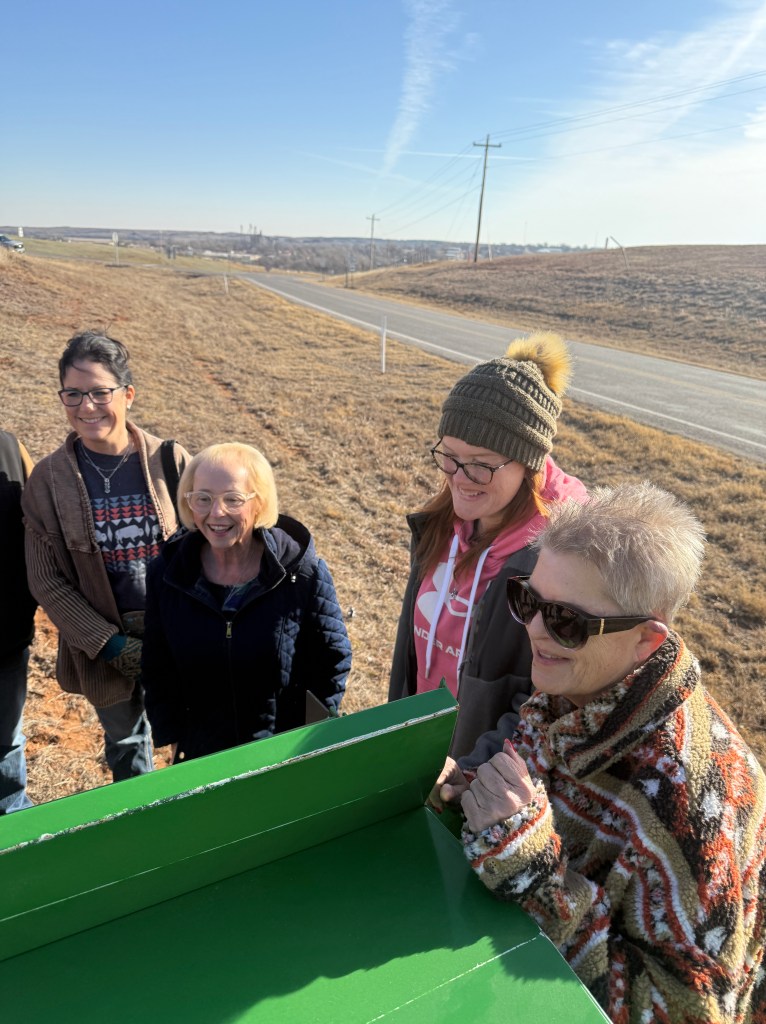

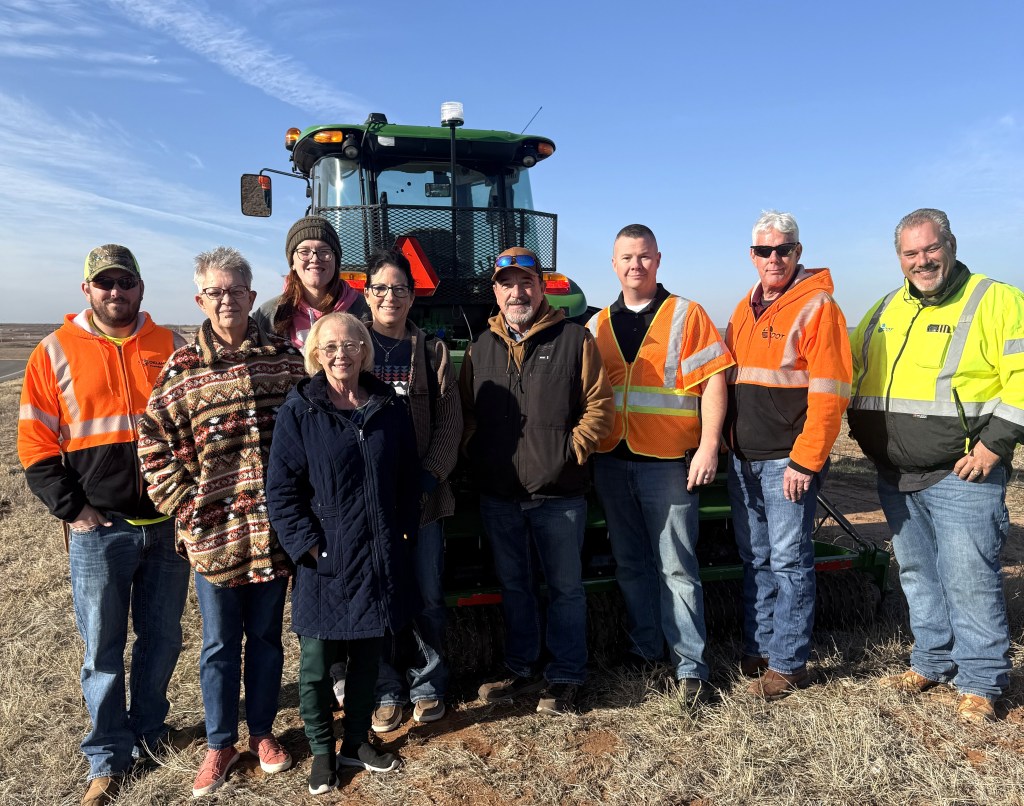
From Left, Back Row, Cooper Hensley, ODOT; Jymay McLoud, Roger Mills County Clerk; Ashley Martindale, GFWC-OK Cheyenne Sorosis Club President; Melanie Chapman, Editor, The Cheyenne Star, and Sorosis Club member; Lynn Bailey; Jeremy Conway, ODOT District 5 Maintenance Engineer; Brent Almquist, District 5, Engineer; Steve Mendez, ODOT, Superintendent for Roger Mills County. Front Row, Jan Bailey, Roger Mills County District Court Clerk and Cheyenne Sorosis Club Member.
By Monica Bartling, Color Oklahoma Chairman
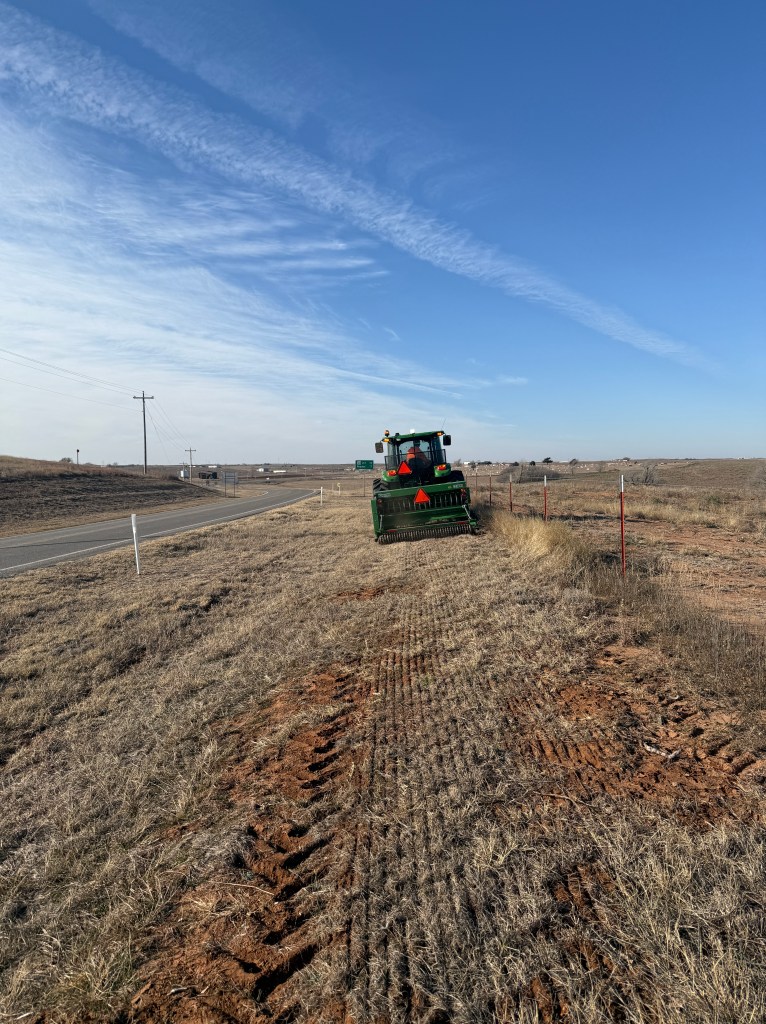
January 29, 2025, Cheyenne, Oklahoma — The GFWC-OK Cheyenne Sorosis Club received a grant from Color Oklahoma (coloroklahoma.com) to plant wildflower seeds on OK-47 west of Cheyenne. The planting is on the north and south sides of the highway for about 1 mile. They Cheyenne Sorosis Club provided $250 in matching funds with a Color Oklahoma Board Member providing an additional $250 so the group would qualify for a $1,000 grant from Color Oklahoma. Forty three total pounds of wildflower seeds were planted by the Oklahoma Department of Transportation (ODOT) with ODOT Roger Mills County Superintendent, Steve Mendez, overseeing the planting.
By mid-April the areas should show beautiful red and yellow Gaillardia (commonly known as Indian Blanket) and bright yellow Coreopsis tinctoria (commonly called plains coreopsis or tickseed). Showy Primrose was also planted but it requires two growing seasons to produce flowers. The showy primrose will produce small pink blossoms that tend to spread quickly after the second growing season. A rainy late winter and early summer would be beneficial for the flowers to produce the first year. While the seeds planted are not perennials, allowing the plants to go to seed will allow them to come back each year. Steve Mendez, ODOT, Roger Mills Superintendent, commented, “My job is to plant the seeds and then not mow them before they go to seed each year.”
“Areas planted will have signs designating them as Color Oklahoma wildflower plantings. The signs serve two purposes. Color Oklahoma Chairman Emeritus, Pearl Garrison, said, “The Color Oklahoma signs show that the areas are wildflower planting areas for ODOT and Color Oklahoma and also remind travelers that the areas may look a little ragged as the flowers go-to-seed mid-summer. Allowing them to re-seed naturally typically helps the plants spread and come back each spring.”
Planting Wildflower seeds not only helps beautify our highways and interstates across Oklahoma, but also provides food for pollinators. According to the National Wildlife Federation planting wildflower plots is one way to help bees and other pollinators at a local level. Color Oklahoma provided seeds for planting more than 517 pounds of seeds in 9 Oklahoma communities this December and early January. Seeds are planted in the cold weather because they require a period of cold, moist conditions to break down naturally occurring chemicals in the seeds that inhibit germination. These substances protect the seeds from germinating prematurely such that they wait until spring to sprout. This process is called cold stratification.
Color Oklahoma was formed in 2002 and receives funding from the sale of wildflower license plates available at your local tag agency or from Service Oklahoma. The form to order a plate can also be downloaded from the Color Oklahoma website at https://coloroklahoma.com/color-oklahoma-license-plate-order-form/. If you would like more information on how your municipality or organization can obtain a grant to plant wildflowers in your area, go to coloroklahoma.com or email coloroklahoma@gmail.com. Color Oklahoma is a committee of the Oklahoma Native Plant Society.
 Color Oklahoma